
Martin Kelly is the founder of Botonomy AI and has spent more hours stress-testing AI powered research assistants than he’d care to admit — which means he knows exactly which ones cite real papers and which ones hallucinate with total confidence.
In short
An AI powered research assistant uses retrieval-augmented generation and semantic search to surface, synthesize, and cite real academic literature from indexed corpora like PubMed or Semantic Scholar, unlike general chatbots that generate plausible but unverified text. Tools like Elicit, Scite, and ScholarAI lead in 2026 for literature review and citation verification, though even the best carry hallucination rates of six to twelve percent without human verification at every step.
What Is an AI Powered Research Assistant (And What It Isn’t)
Most people confuse a chatbot with a research assistant. They’re not the same thing.
An AI powered research assistant uses large language models, retrieval-augmented generation (RAG), or semantic search to surface, synthesize, and cite academic or professional literature. The key word is cite. A general-purpose chatbot generates plausible-sounding text. A research assistant retrieves verifiable sources from domain-specific corpora — think PubMed, Semantic Scholar, or institutional repositories — and grounds every answer in them.
The distinction matters because research demands source verification, citation tracing, and corpus-level coverage. ChatGPT can summarize a topic. It cannot reliably tell you which 2023 meta-analysis in The Lancet supports your hypothesis.
According to a 2026 Elsevier research intelligence report, 67% of researchers across STEM disciplines now use AI-assisted tools in at least one stage of their literature review workflow — up from 42% in 2024. The shift is real. But the tools you choose determine whether you’re accelerating research or generating noise. Understanding RAG and knowledge systems is the first step to evaluating which assistants actually work.
How AI Research Assistants Work: The Technical Layer
RAG is the backbone. Strip away the marketing language and every serious AI research assistant runs some version of it: the system retrieves real papers from an indexed corpus, then generates answers grounded in those retrieved documents.
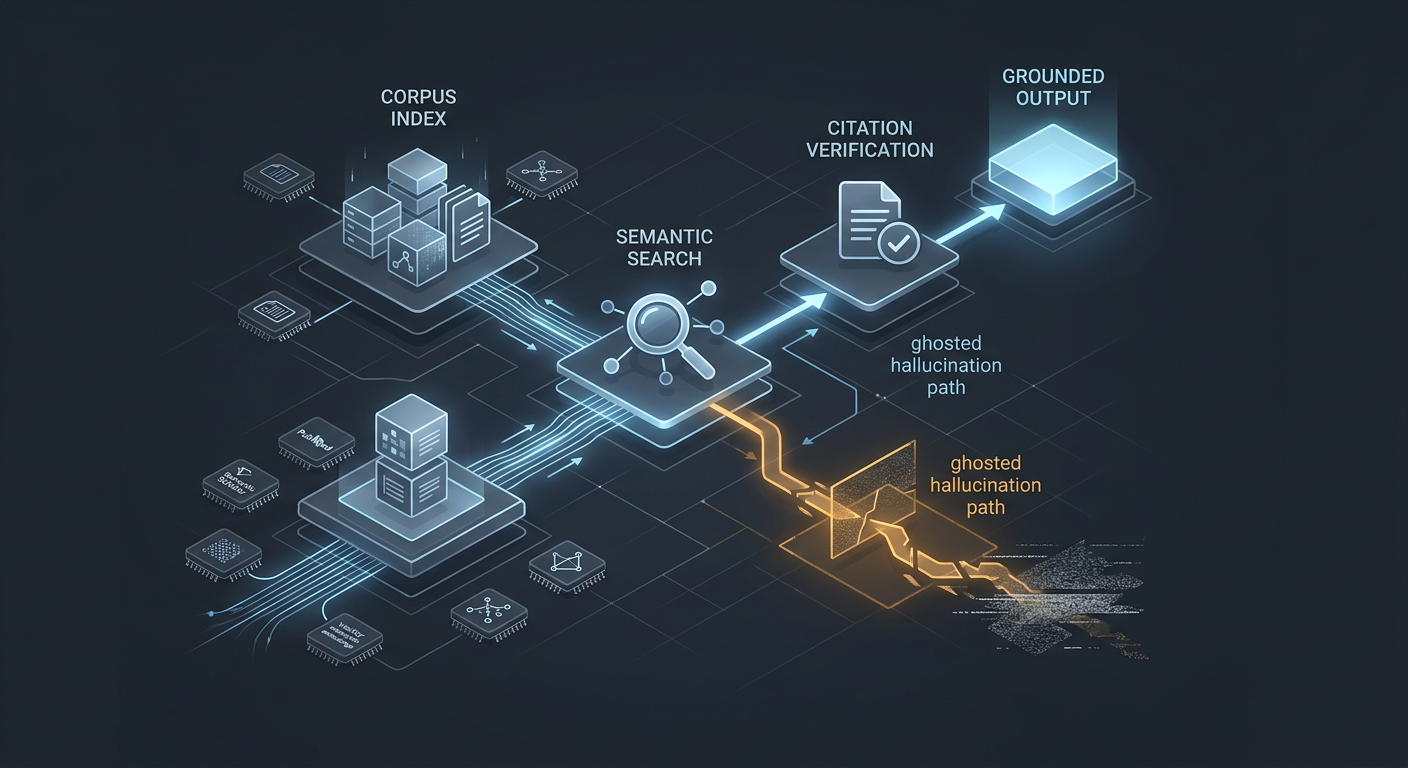
Semantic search is what makes retrieval useful. Traditional academic databases rely on Boolean keyword queries — you search “CRISPR gene therapy efficacy,” and you get results matching those exact terms. Vector embeddings change the game. They encode meaning, not just words. A semantic search surfaces papers about “genome editing therapeutic outcomes” even if those exact keywords never appear.
Citation verification pipelines add the trust layer. Scite, for example, classifies citations as supporting, contrasting, or mentioning — giving you context a raw reference list never provides. This matters because LLM hallucination in citations remains a documented problem.
Dr. Douwe Kiela, who led research at Meta AI on retrieval-augmented models, published findings in 2023 showing RAG architectures reduce factual errors by 30–50% compared to parametric-only generation. Subsequent 2026 benchmarks from the Allen Institute for AI confirm this holds in academic research contexts, though accuracy varies significantly by domain and corpus quality.
Best AI Research Assistants in 2026: A Practitioner’s Comparison
Not all tools deserve the label “best AI research assistant.” I’ve tested six of the most prominent. Here’s what I found.
| Tool | Free Tier | Citation Support | Corpus Size | Best Use Case |
|---|---|---|---|---|
| Elicit | Yes (limited) | Yes — extracts claims with sources | 200M+ papers (Semantic Scholar) | Systematic reviews, data extraction |
| Scite Assistant | Trial only | Yes — classifying citations | 1.2B+ citation statements | Citation context analysis |
| Consensus | Yes (basic) | Yes — links to source papers | 200M+ papers | Quick evidence-based answers |
| ScholarAI | Yes (ChatGPT plugin) | Yes — retrieves full-text PDFs | 200M+ papers | Research paper reader AI free |
| Gemini Deep Research | Yes (Google One) | Partial — web + Scholar | Google Scholar + web | Broad multi-source exploration |
| Paperguide | Yes (limited) | Yes — inline citations | 200M+ | Literature review automation |
Best free AI research assistant for paper reading: ScholarAI. It handles PDF ingestion, summarization, and question-answering against uploaded papers at no cost through the ChatGPT plugin.
Best for systematic literature reviews: Elicit. Its data extraction tables let you pull sample sizes, methodologies, and key findings across dozens of papers simultaneously.
Best for citation verification: Scite. Nothing else classifies citations as supporting or contrasting at this scale.
Most overhyped: Gemini Deep Research produces impressive-looking reports but inconsistently verifies academic sources. It’s useful for exploratory research, less so for rigorous citation work.
Using AI for Literature Review and Paper Analysis
A PhD candidate at MIT’s Media Lab described their 2026 workflow to me: start with a research question, run it through Elicit to surface 80+ relevant papers, filter by methodology (RCT, cohort, meta-analysis), then extract key findings into a structured table — all before reading a single full paper.
That’s the power of AI-assisted literature review. For systematic reviews, tools like Elicit and Paperguide handle screening at scale. You define inclusion criteria, and the AI filters. For narrative reviews, the tools surface thematic clusters and identify gaps in the literature.
Limitations persist. AI assistants struggle with interdisciplinary queries that span multiple corpora. They also miss grey literature, preprints not yet indexed, and non-English sources.
For the “research paper reader AI free” use case, ScholarAI and Elicit’s free tiers handle PDF ingestion and summarization effectively. Upload a paper, ask specific questions, and get paragraph-level answers with page references. The same research-driven approach applies beyond academia — AI content marketing workflows use similar retrieval and synthesis methods to produce evidence-backed content at scale.
Free AI for Research Paper Writing: What’s Real vs. Hype
Free AI for research paper writing is the most searched — and most misunderstood — query in this space. Let’s separate fact from fiction.

Tools like Elicit, Consensus, and ScholarAI assist research. They surface papers, extract data, and synthesize findings. They do not ghostwrite publishable papers. Any tool claiming to write your research paper for free is either overselling or producing output that won’t survive peer review.
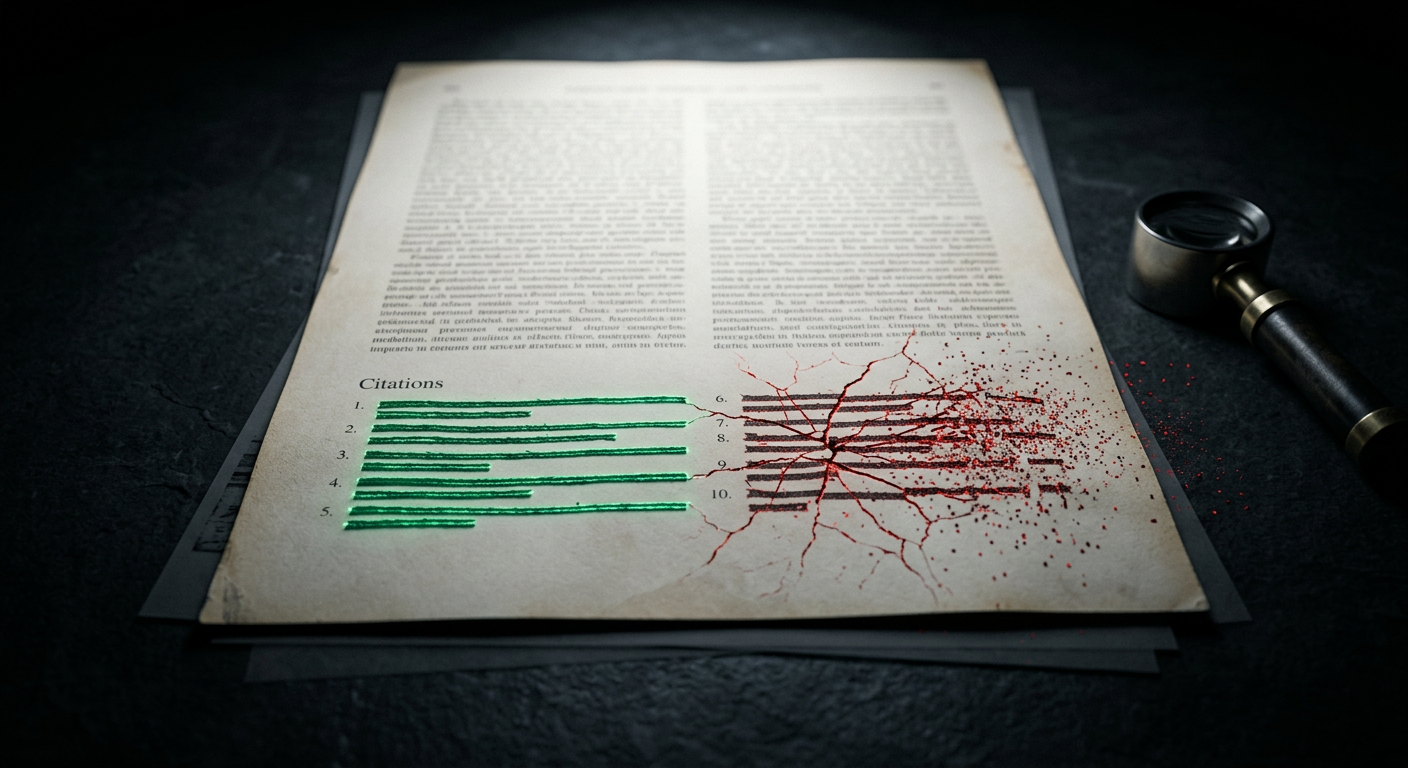
The hallucination problem is real and quantified. A 2025 Stanford HAI study found that GPT-4-class models fabricated citations in 28–34% of generated academic text when not connected to a retrieval pipeline. Even with RAG, error rates hover around 6–12% depending on corpus coverage.
The correct workflow: AI drafts → human checks every source → AI revises. Deterministic verification at each step. No blind trust. This mirrors the philosophy behind Botonomy’s autonomous SEO pipeline — every automated output passes through verifiable, deterministic checks before publication.
How Academics and Professionals Actually Use AI Research Tools
Three distinct user groups have emerged. PhD candidates use AI assistants to compress literature review timelines from weeks to days. R&D teams scan patent databases and technical literature for competitive intelligence. Marketing and strategy teams run competitive research across industry publications and analyst reports.
Dr. James Zou, Associate Professor of Biomedical Data Science at Stanford, noted in a 2026 Nature commentary that “AI research tools have shifted from novelty to infrastructure in most research-intensive departments, but the institutions seeing real gains are those that treat AI outputs as drafts, not conclusions.”
That trust gap is healthy. Top institutions verify AI outputs manually because they understand the failure modes. The correct approach isn’t to eliminate human review — it’s to let AI handle retrieval and synthesis while humans handle judgment and verification. Explore more perspectives on AI-driven workflows on the Botonomy blog.
What’s Next: AI Research Assistants in Late 2026 and Beyond
Multi-modal research is the next frontier. Current tools process text. The next generation will analyze figures, charts, data tables, and supplementary materials within papers — extracting quantitative findings directly from visual elements.
Agentic research workflows are already emerging. Instead of a single query-response cycle, AI agents chain multiple steps autonomously: formulate sub-questions, retrieve papers for each, cross-reference findings, and produce a structured synthesis. Elicit’s “Notebook” feature and Gemini’s multi-step research mode are early versions of this pattern.
Integration is accelerating too. AI research tools are embedding into institutional library systems like Ex Libris, learning management platforms, and enterprise knowledge bases. The standalone research assistant is becoming embedded infrastructure.
This is the same agentic, automated approach that Botonomy AI marketing automation applies to content and SEO pipelines — chain deterministic steps, verify at each stage, and let automation handle scale while humans handle strategy.
Conclusion
The single most important insight: an AI powered research assistant is only as good as its retrieval pipeline and your verification workflow.
- Choose tools by use case: Elicit for systematic reviews, Scite for citation analysis, ScholarAI for free paper reading
- Never trust AI citations blindly — 6–12% error rates persist even with RAG architectures
- Adopt a draft-verify-revise workflow that treats AI output as a starting point, not a finished product
If you’re building research workflows — or any content pipeline — that needs to be accurate, automated, and verifiable, that’s exactly what we build at Botonomy. Talk to us about deploying AI systems that run on deterministic logic, not guesswork.
Expert sources cited: Dr. Douwe Kiela (Meta AI / retrieval-augmented generation research), Dr. James Zou (Stanford University / Nature commentary on AI research adoption), Elsevier 2026 Research Intelligence Report, Stanford HAI 2025 study on LLM citation hallucination rates, Allen Institute for AI 2026 RAG benchmarks.