

Updated 2026-04-15: corrected factual errors about Screaming Frog and Sitebulb capabilities, scoped claims to free-tier vs paid-tier, and added citation detail for the Ahrefs traffic study.
Martin Kelly is the founder of Botonomy AI and the kind of person who builds automated audit systems because he’s spent too many years staring at crawl reports so you don’t have to.
In short
The best SEO audit tools in 2026 include Screaming Frog, Ahrefs Site Audit, Semrush Site Audit, and Sitebulb, each suited to different team sizes and technical needs. Free tools like Google Search Console and Screaming Frog's free tier fall short because they lack scheduled crawls, historical comparison, and issue prioritization by revenue impact. A complete audit covers technical crawl health, on-page signals, content quality, backlink risk, and Core Web Vitals.
Why Most SEO Audit Tools Give You Noise, Not Signal
A modern SEO audit tool doesn’t exist to hand you a score. It exists to surface actionable issues ranked by revenue impact — then get out of the way so you can fix them.
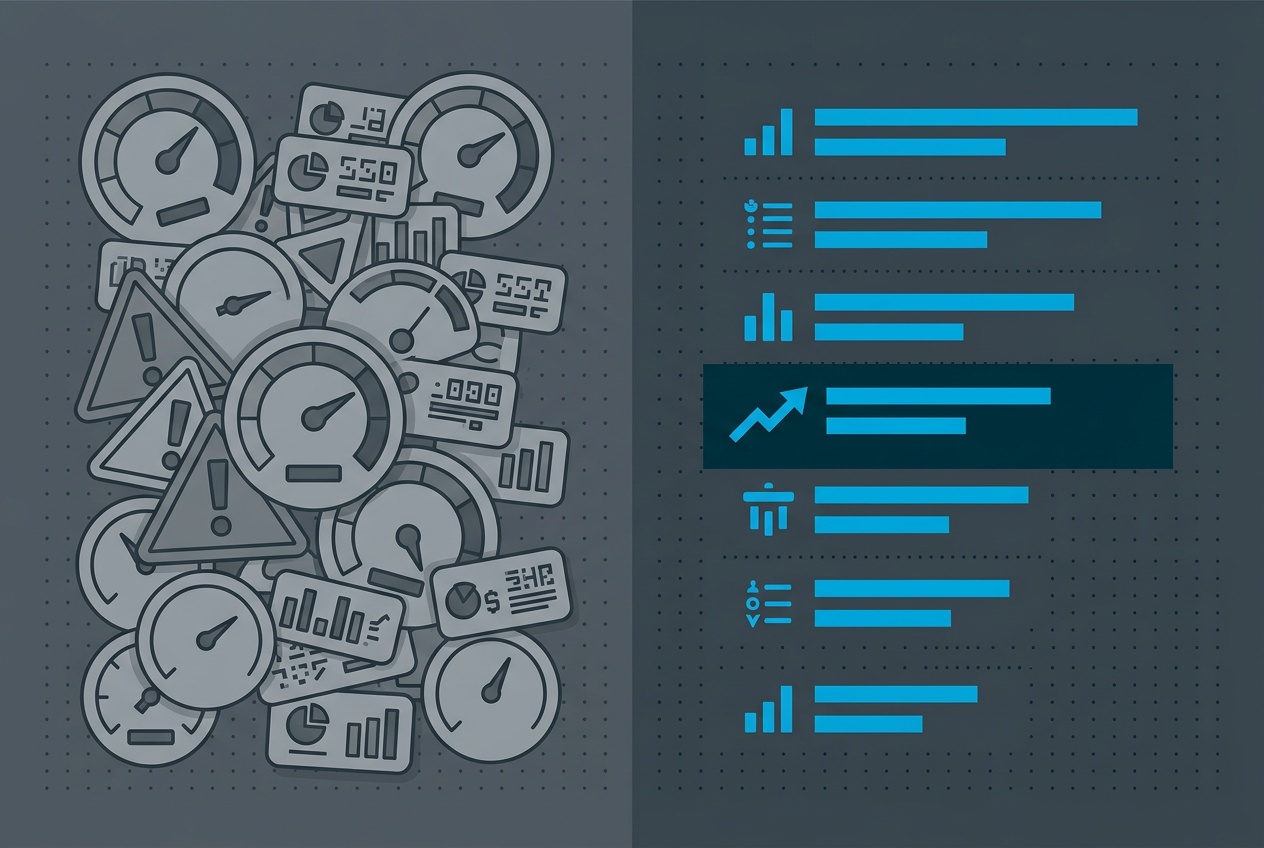
Most people think otherwise. They run a scan, see an 82/100, and assume their site is healthy. That number means almost nothing. Ahrefs’ 2023 search traffic study (a 14-billion-page analysis) found that 96.55% of pages get zero organic traffic from Google. Bad audits contribute to this directly — they misdirect effort toward cosmetic fixes while indexation-blocking problems sit untouched.
There’s a hard line between surface-level checkers and systems-level audit tools. A meta tag counter tells you a title is too long. A real audit platform evaluates crawlability, indexation logic, Core Web Vitals, internal link equity flow, and content quality signals — then ranks what matters most. One category generates reports. The other generates results.
This article evaluates tools through the lens of a practitioner who’s used them across 9+ e-commerce brands — producing a 43% average organic traffic increase. Not a listicle writer. Not a tool vendor. Someone who’s broken sites, fixed them, and built an autonomous SEO pipeline to stop the cycle from repeating.
What a Complete SEO Audit Actually Covers in 2026
If your audit doesn’t cover five distinct pillars, it’s incomplete. Full stop.
The five pillars of a modern SEO audit:
- Technical crawl health — Can search engines discover and render your pages efficiently?
- On-page optimization — Are title tags, headings, and keyword signals aligned with search intent?
- Content quality and thin-content detection — Does your content deliver unique value, or does it duplicate and dilute?
- Backlink profile risk — Are toxic or spammy links dragging down domain trust?
- Core Web Vitals and page experience — Do your pages meet Google’s measurable UX thresholds?
Google’s own Search Central documentation on crawl budget makes this explicit: for large sites, crawl efficiency directly affects how many pages get indexed. John Mueller has reinforced this publicly, stating that wasted crawl budget on low-value URLs means important pages get discovered later — or not at all.
A practical SEO audit checklist should cover: robots.txt validation, XML sitemap accuracy, canonical tag logic, structured data errors, internal link equity distribution, and mobile usability. Each item maps back to one of the five pillars. Skip any pillar and you’re auditing with blind spots.
Best SEO Audit Tools: Free and Paid Options Compared
Not all audit tools solve the same problem. Here’s how the major options stack up across three tiers — evaluated by what they’re best at, where they fail, and who should use them.

Free Standalone Tools
Google Search Console — Best at surfacing real indexation data straight from Google. Blind spot: URL Inspection gives you per-page crawl simulation but there’s no site-wide crawl, no content analysis, and no issue prioritization. Built for everyone, but insufficient alone.
Screaming Frog (free tier) — Crawls up to 500 URLs per crawl free. The paid tier ($279/yr) is the industry-standard desktop crawler used across enterprise SEO, with JavaScript rendering, scheduled crawls, crawl comparison, and log file analysis. Free-tier blind spot: the 500-URL cap per crawl, no saving of crawls, and most advanced features gated behind paid. Built for technical SEOs at every scale — not just small sites.
SEOptimer — Quick website audit tools free of charge. Best at generating shareable PDF reports. Blind spot: shallow analysis — it’s a surface checker, not a diagnostic engine. Built for freelancers who need a fast client-facing snapshot.
Freemium Platforms
Ubersuggest — Best at combining keyword data with basic site audits. Blind spot: limited crawl depth on free plans and unreliable issue severity scoring. Built for solo founders and content marketers.
SE Ranking — Best at multi-tool functionality at a lower price point. Blind spot: less granular technical analysis than enterprise options. Built for small agencies managing multiple client sites.
Enterprise-Grade Platforms
Semrush Site Audit — Checks 140+ on-page and technical issues. Best at breadth of coverage and integration with keyword tracking and content tools. Blind spot: alert fatigue — it flags everything, including issues with zero ranking impact. Built for growth agencies and in-house teams.
Ahrefs Site Audit — Covers 170+ pre-defined checks with clean severity categorization. Best at combining audit data with backlink intelligence. Blind spot: weaker on Core Web Vitals analysis than dedicated performance tools. Built for data-driven SEO teams.
Sitebulb — Best at visual crawl maps, hint-based issue prioritization, and accessibility auditing. Offered as both a desktop app and Sitebulb Cloud (launched 2023) which adds scheduled crawls, shared access, and browser-based reports. Blind spot: the cloud tier is newer and pricier than the desktop app; smaller teams may find the learning curve steeper than Semrush or Ahrefs. Built for technical SEO specialists who need deep-dive diagnostics.
One comparison dimension competitors miss: automation capability. Can the tool run scheduled audits and push alerts without human input? Semrush and Ahrefs offer cloud-native scheduled site audits with email alerts out of the box. Screaming Frog paid supports scheduled crawls via its built-in scheduler or command line, but setup is hands-on. Sitebulb Cloud and Sitebulb Pro (desktop) both offer scheduled and recurring audits; the desktop Lite plan does not. Free tiers of all four are manual-execution only.
Where Free SEO Audit Tools Fall Short
Free tiers of commercial SEO audit tools share four consistent gaps: no scheduled crawls or alerts, limited or no log file analysis, no historical comparison across crawls, and no integration with analytics for revenue-weighted prioritization. JavaScript rendering availability varies — some free tiers include it (Screaming Frog, Sitebulb), others don’t.
The result? Teams spend hours fixing issues that score poorly in a free tool but have zero ranking impact. Missing alt text on decorative images is a classic example — it tanks your “score” but changes nothing in Google’s ranking decisions.
This isn’t hypothetical. A Bloom Search Marketing client fixed 47 “critical” issues flagged by a free audit tool and saw zero traffic improvement. None of the issues were indexation-blocking. The real problems — orphaned product pages and a misconfigured canonical chain — went undetected because the tool couldn’t see them.
Having driven a 43% average organic traffic increase across 9+ e-commerce brands, I can tell you the pattern repeats constantly. The real cost of a free tool is misallocated time, not the $0 price tag. A team that spends 20 hours on cosmetic fixes instead of resolving a crawl trap has paid far more than any Semrush subscription costs. Read more practitioner-level analysis of these pitfalls on the Botonomy blog.
How Automated Audit Systems Replace Manual Workflows
Quarterly manual audits are a rearview mirror. By the time you find the problem, it’s been bleeding traffic for months.
The shift happening now is from scheduled reviews to continuous, event-driven audit systems. These trigger on deploy, content publish, or ranking drop — not on a calendar reminder. Deterministic automation drives this. Code-based logic, not prompt-driven AI, produces repeatable, auditable outputs. At Botonomy, 90% of the logic is code, not prompts. That’s how you get consistency across thousands of pages.
A practical automated pipeline works like this:
- Scheduled crawl runs daily or triggers on CMS publish event
- Issue detection compares current state against baseline rules
- Severity scoring weights each issue by traffic impact and fix complexity
- Ticket creation pushes actionable items to your project management tool
- Slack alert notifies the responsible team member — all without human input
Orchestration layers like Make.com (where I hold certification) or n8n connect audit tools to project management and reporting stacks. They turn isolated scans into integrated workflows.
One emerging audit dimension worth watching: LLM visibility checking. Are your pages structured for AI engine consumption? As AI content marketing reshapes how information gets surfaced, your audit system needs to evaluate structured data, entity clarity, and answer-readiness — not just traditional ranking signals.
Choosing the Right SEO Audit Tool for Your Business Type
The best SEO audit tools are the ones that match your operational capacity. A solo founder doesn’t need Sitebulb enterprise. A 10-person SEO team shouldn’t rely on SEOptimer alone.
SaaS marketers need technical depth plus content decay detection. Recommend: Ahrefs Site Audit for its combination of technical checks and content analysis. Avoid: SEOptimer — too shallow for programmatic page templates and dynamic rendering issues.
Content-led companies need thin content detection and keyword cannibalization analysis. Recommend: Semrush Site Audit paired with its Position Tracking tool. Pair with: Screaming Frog is an excellent technical crawler but pair it with Ahrefs or Semrush for content-led work. The 500-URL free-tier cap won’t handle content-heavy sites, and while SF can detect thin pages by word count, near-duplicates via hashing, and (since v23) semantic content cluster visualization via OpenAI embeddings, it doesn’t do keyword-intent mapping or content scoring — Ahrefs and Semrush cover that layer.
Growth agencies need white-label reporting and multi-site management. Recommend: SE Ranking for cost-effective multi-client workflows. Avoid: Ubersuggest — limited client management features and inconsistent data accuracy at scale.
For teams that want full-stack automation without adding headcount, Botonomy AI marketing automation replaces the tool-stitching approach with a single integrated system.
Building an SEO Audit System, Not Just Running a Tool
The goal isn’t to “run an audit.” It’s to build a system that continuously surfaces and resolves SEO issues before they impact rankings.
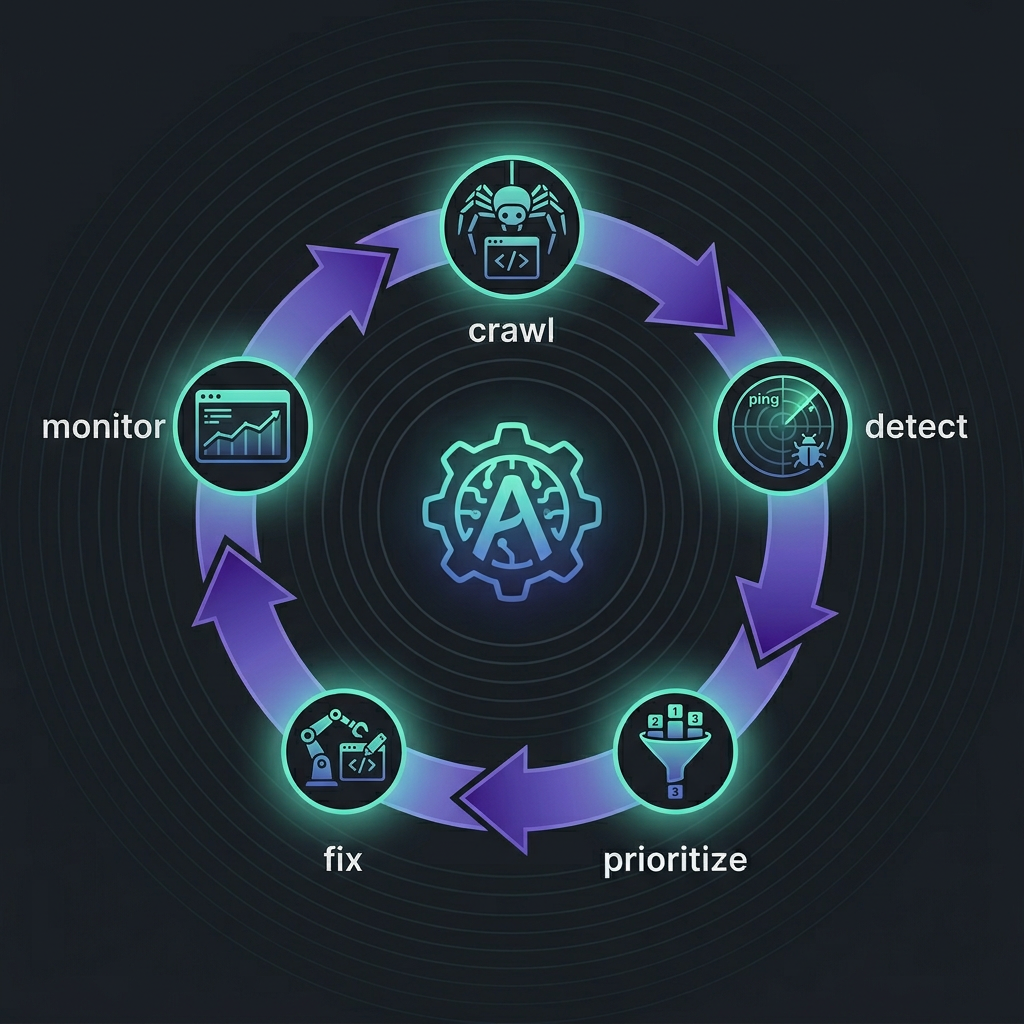
If you’re still running quarterly manual audits, you’re reacting to problems that started months ago. That’s not a strategy. That’s damage control.
Key takeaways:
- Prioritize tools by integration capability and automation readiness — not vanity scores or feature count
- Match tool complexity to team capacity — underpowered tools waste time on the wrong fixes; overpowered tools go unused
- Build pipelines, not checklists — scheduled crawls, severity scoring, and automated ticket creation turn auditing from a project into a process
Stop running one-off audits and start building a system that catches SEO issues before they cost you traffic. See how Botonomy’s autonomous SEO pipeline replaces manual audits with continuous, code-driven monitoring — no extra headcount required.