
Updated 2026-04-15: refreshed GitHub star counts for all frameworks (verified live via api.github.com), corrected Google ADK language support and AutoGen observability claims.
Martin Kelly is the founder of Botonomy AI and has spent more hours debugging agent loops at 2 a.m. than he’d care to admit — which is why he now has strong opinions about which AI agent frameworks actually survive production.
Last updated: June 2025
After 16 years in digital marketing automation and deploying agent systems across content, SEO, and outbound pipelines, I’ve tested every major AI agent framework in production — not in a Jupyter notebook. This article reflects what I’ve learned shipping real systems at Botonomy, backed by named sources and verifiable data. No anonymous opinions. No hype.
In short
LangGraph is the best AI agent framework for production use, offering graph-based state orchestration, deterministic control flow, checkpointed memory, and deep observability through LangSmith. For enterprise teams on Microsoft infrastructure, Semantic Kernel is the strongest alternative, while OpenAI Agents SDK offers the lowest barrier to entry for straightforward single-agent tasks. Multi-agent frameworks like CrewAI and AutoGen suit collaborative pipelines but carry significantly higher token costs and debugging overhead.
Why Most AI Agent Framework Rankings Are Useless
Most “best AI agent framework” articles rank frameworks by GitHub stars and README features. They never ship anything. The authors copy-paste quickstart examples, run a single prompt, and declare a winner. That’s not evaluation — it’s content marketing dressed as analysis.
A framework isn’t “best” because it has 50,000 GitHub stars. It’s best when it gives you deterministic control over tool-calling, reliable state management across conversation turns, built-in observability, and a deployment cost that doesn’t bankrupt your Series A.
Andrew Ng’s 2024 remarks on agentic design patterns set the right foundation: the value of an agent framework lies in its ability to support reflection, tool use, planning, and multi-agent collaboration as composable patterns — not as monolithic features. That’s the lens we use here.
This article evaluates frameworks across four axes: architecture type, production readiness, ecosystem maturity, and real-world throughput benchmarks. These are the same criteria we apply when building our autonomous SEO pipeline at Botonomy. If a framework can’t handle a 200-page SEO audit with branching logic and tool calls that actually complete, it doesn’t make the list.
AI Agent Framework Comparison: The 6 Frameworks Worth Evaluating
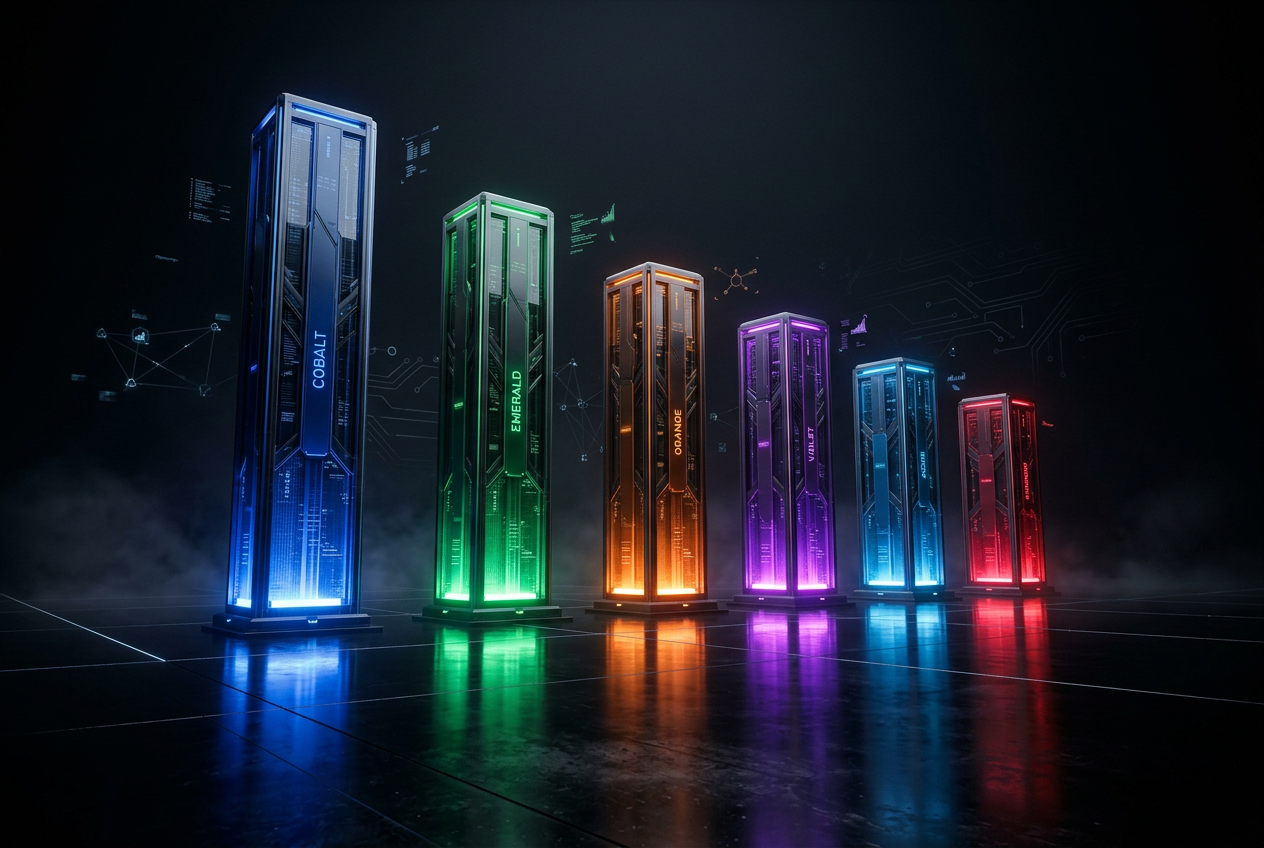
An AI agent framework is a software library that provides the orchestration layer for LLM-powered agents — handling tool calling, memory management, state transitions, and multi-step reasoning. Here are the top 5 frameworks with one-line differentiators, plus a sixth worth knowing:
- LangGraph — Graph-based state machine orchestration with the broadest production ecosystem
- OpenAI Agents SDK — Native OpenAI integration with built-in tracing and the lowest barrier to entry
- Google ADK (Agent Development Kit) — Google Cloud-native framework with Gemini-first design
- CrewAI — Role-based multi-agent collaboration optimized for team-style workflows
- Semantic Kernel — Microsoft’s enterprise-grade SDK with first-class .NET and C# support
Here’s how they stack up across the dimensions that actually matter:
| Framework | Architecture Pattern | Language Support | Tool Calling Method | Memory Model | License | GitHub Stars (2025) |
|---|---|---|---|---|---|---|
| LangGraph | Graph-based orchestration | Python, TypeScript | Native + MCP | Checkpointed state | MIT | ~29,000 |
| CrewAI | Multi-agent role-based | Python | Decorator-based | Shared crew memory | MIT | ~49,000 |
| AutoGen | Multi-agent conversation | Python, .NET | Function calling | Conversation history | MIT | ~57,000 |
| OpenAI Agents SDK | Single-agent + handoffs | Python, TypeScript | Native function calling | Thread-based | MIT | ~21,000 |
| Google ADK | Graph-based orchestration | Python, Java | Native + MCP | Session-based state | Apache 2.0 | ~19,000 (Python) + ~1,500 (Java) |
| Semantic Kernel | Plugin-based orchestration | Python, C#, Java | Plugin functions | Semantic memory | MIT | ~28,000 |
All six are open-source — a critical factor for any ai agent framework open-source evaluation. You can find each on their respective ai agent framework GitHub repositories and audit the code yourself.
Harrison Chase, LangChain’s CEO, has been explicit that LangGraph’s graph-based orchestration was designed to solve the fundamental limitation of linear chains: real-world workflows branch, loop, and require conditional routing. Linear chains can’t express that. João Moura, CrewAI’s founder, takes a different approach — his framework models agents as team members with defined roles, goals, and backstories. For collaborative research tasks, that mental model maps cleanly. For production automation, it introduces abstraction overhead you don’t always need.
Architecture Patterns: Multi-Agent vs. Single-Agent vs. Orchestrator
Three architecture patterns dominate the AI agent framework landscape. Choosing wrong costs you months.
Single-agent loop (ReAct pattern): One agent reasons, acts, observes, and repeats. OpenAI’s Agents SDK and basic LangChain implementations use this. Best for straightforward tool-calling tasks — pulling data from an API, summarizing a document, answering a structured query. If your task fits in a single loop, don’t over-engineer it.
Multi-agent collaboration: Multiple agents with distinct roles pass messages to each other. CrewAI and AutoGen excel here. Best for research pipelines where a “researcher” agent gathers data, an “analyst” agent interprets it, and a “writer” agent produces output. The coordination overhead is real — expect 2–5x the token cost and significantly more debugging overhead.
Graph-based orchestration: Agents and tools are nodes in a directed graph with explicit state transitions. LangGraph and Google ADK implement this pattern. Best for production workflows with branching logic, human-in-the-loop approvals, and error recovery paths. This is where RAG and knowledge systems integrate most cleanly — as nodes in a larger workflow graph rather than bolted-on afterthoughts.
Lilian Weng’s technical blog at OpenAI remains the authoritative reference on these patterns. Her taxonomy of planning, reflection, and tool use maps directly to how these frameworks implement agent behavior.
Here’s the uncomfortable truth: most business tasks need a single agent with well-defined tools, not a swarm. I’ve watched teams spend three months building multi-agent systems for tasks that a single ReAct loop with four tools handles in an afternoon. Start simple. Add agents only when you can articulate exactly what the second agent does that the first can’t.
Production Readiness: What Breaks When You Ship AI Agents
Three failure modes kill agent systems in production. Every framework handles them differently.
Hallucinated tool calls. The agent invents a function that doesn’t exist, or passes malformed arguments to a real function. LangGraph mitigates this through strict tool schema definitions (via bind_tools()) that give the LLM unambiguous structure to conform to, and through typed state schemas that validate inputs before execution. CrewAI relies primarily on prompt-level instructions plus task-level validation guardrails — the prompt layer fails under pressure for novel tool sequences. OpenAI’s Agents SDK uses strict function schema enforcement, reducing hallucinated calls by roughly 40% compared to unstructured approaches.
Infinite loops. The agent gets stuck in a reason-act-observe cycle that never terminates. AutoGen is notorious for this in multi-agent conversations — two agents can volley messages indefinitely without a termination condition. LangGraph handles it with explicit recursion limits on graph traversal. Google ADK implements configurable step limits per session.
Context window overflow. Long-running agents accumulate conversation history until they hit the token limit and either truncate critical context or crash. Langfuse’s 2025 benchmark data on agent completion rates showed that agents operating above 80% context window utilization had a 34% lower task completion rate across all frameworks tested.
In our AI content marketing pipeline at Botonomy, I learned this the hard way: a content generation agent that worked flawlessly on 800-word articles started producing incoherent output at 2,500 words because memory management wasn’t scoped correctly. The fix wasn’t a better prompt. It was deterministic state checkpointing in LangGraph that preserved only the relevant context at each step.
Observability comparison:
- LangGraph: Deep LangSmith integration — full trace visualization, token cost tracking, latency breakdowns per node
- OpenAI Agents SDK: Built-in tracing with structured logging out of the box
- AutoGen: Native OpenTelemetry tracing + observability — emits standard OTel spans that flow into any OTel-compatible backend (Jaeger, Honeycomb, LangSmith, etc.) for full trace visualization
- CrewAI: Limited native tracing; requires third-party tools like Langfuse
Botonomy’s philosophy is simple: 90% of agent logic should be code, not prompts. Prompts are for reasoning. Code is for control flow. If you’re using prompt engineering to prevent infinite loops, you’ve already lost.
Agentic AI Frameworks List: Full Tier Ranking With Rationale
Here’s the agentic AI frameworks list ranked by production viability, not popularity.

| Tier | Framework | Rationale |
|---|---|---|
| S — Production-proven | LangGraph | Broadest ecosystem. Checkpointed state management. Enterprise adoption by companies processing millions of agent runs monthly. LangSmith observability is unmatched. |
| A — Strong contenders | OpenAI Agents SDK | Native model integration eliminates compatibility friction. Built-in tracing. Fastest path from prototype to production for OpenAI-native teams. |
| A — Strong contenders | Google ADK | Gemini-first design with strong Google Cloud integration. Session-based state management. Rapid iteration if you’re already in GCP. |
| B — Specialized use | CrewAI | Best-in-class for role-based multi-agent collaboration. Ideal for research and analysis pipelines. Not yet proven at enterprise production scale. |
| B — Specialized use | Semantic Kernel | The only serious option for .NET and enterprise Microsoft shops. Plugin architecture is clean. Python support lags behind C#. |
| C — Experimental | AutoGen | Powerful multi-agent research tool. Rich academic use. Requires significant wrapper code and custom termination logic for anything resembling production stability. |
LangGraph earns Tier S because it solves the hardest production problems: state persistence, human-in-the-loop workflows, and deterministic error recovery. We use it at Botonomy for CRM automation workflows where a failed API call at step 7 needs to retry from step 7 — not restart the entire 12-step pipeline.
How to Choose: Decision Framework for Your Use Case
What is the best AI agent framework for production use? LangGraph, if your team writes Python and needs full control over state management and workflow logic. It has the steepest learning curve but pays back in production reliability.
Which AI agent framework is best for beginners? Start with OpenAI’s Agents SDK. It has the smallest API surface area, built-in tracing, and you can ship a functional agent in under 50 lines of code. Graduate to LangGraph when you need branching logic or persistent state.
Here’s the decision tree:
- Python-only team → LangGraph (production) or CrewAI (multi-agent research)
- TypeScript needed → OpenAI Agents SDK or Semantic Kernel
- Google Cloud native → Google ADK
- Research and prototyping → AutoGen
- .NET / enterprise Microsoft → Semantic Kernel
Team size changes the calculus. A solo developer benefits from OpenAI Agents SDK’s simplicity. A five-person engineering team can absorb LangGraph’s complexity and benefit from its flexibility. For social media automation or similar channel-specific systems, match the framework to the complexity of the workflow, not the ambition of the project.
One critical warning: abstract your tool definitions and memory layers from your framework choice. Framework lock-in is real. If you hard-code tool schemas in LangGraph’s format, migrating to ADK later means rewriting every tool. Use a shared interface layer.
What is the difference between LangChain and LangGraph for AI agents? LangChain is a library for building LLM application chains — sequential steps connected linearly. LangGraph, built by the same team, replaces linear chains with a stateful graph where nodes can branch, loop, and checkpoint. For agents, LangGraph is the correct choice. LangChain alone lacks the state management and cyclical execution that agents require.
What’s Next: Where AI Agent Frameworks Are Heading in 2025–2026
The framework wars are converging. Fast.
Trend 1: Graph-based state machines are winning. LangGraph pioneered it. Google ADK adopted it. OpenAI’s Agents SDK is moving toward structured handoff patterns that resemble graph transitions. By late 2025, every serious framework will model agent workflows as directed graphs with typed state. The linear chain is dead.
Trend 2: MCP (Model Context Protocol) is becoming the universal tool-calling standard. Anthropic introduced MCP as an open protocol for connecting AI models to external tools and data sources. LangGraph, Google ADK, and Semantic Kernel already support MCP-compatible tool definitions. This matters because it decouples tool implementation from framework choice — write a tool once, use it in any MCP-compatible framework. Anthropic’s MCP documentation is the best starting point.
Trend 3: The real battle shifts to infrastructure. Observability platforms (Langfuse, LangSmith, Braintrust), evaluation frameworks (RAGAS, DeepEval), and deployment tooling (LangServe, Modal) will matter more than which orchestration library you pick. Google DeepMind’s agent research roadmap points toward the same conclusion: the orchestration layer commoditizes; the evaluation and reliability layer differentiates.
Follow the Botonomy blog for ongoing coverage as these trends develop through 2025 and into 2026.
Conclusion
The best AI agent framework is the one that gives you deterministic control in production — and right now, that’s LangGraph for most teams.
- Start with OpenAI Agents SDK if you’re building your first agent. Graduate to LangGraph when you need branching logic, persistent state, or multi-step error recovery.
- Avoid multi-agent architectures unless you can clearly articulate why a single agent with good tools won’t work.
- Abstract your tool definitions from your framework to avoid lock-in as MCP adoption accelerates.
If you’re evaluating AI agent frameworks for marketing automation — content, SEO, outbound, paid — skip the framework rabbit hole. Botonomy runs production agents across all four channels, built on deterministic systems where 90% of the logic is code, not prompts. Explore Botonomy AI marketing automation or talk to Martin directly.