
Martin Kelly is the founder of Botonomy AI and has spent 16 years staring at crawl logs so you don’t have to — which is why he built systems that turn technical SEO checklists into automated workflows instead of spreadsheets.
Technical SEO checklist — core items:
- Confirm Googlebot can crawl and index every target page
- Validate robots.txt blocks nothing critical
- Submit a clean, dynamic XML sitemap
- Set self-referencing canonical tags on all pages
- Pass all three Core Web Vitals thresholds
- Enforce HTTPS with zero mixed content warnings
- Flatten site architecture to ≤3 clicks from homepage
- Eliminate orphan pages from internal link graph
- Implement structured data (Article, FAQ, Product)
- Fix broken internal links site-wide
That’s the skeleton. The rest of this article puts muscle on it — with specific numbers, named sources, and a prioritization framework I’ve used across nine e-commerce brands to produce a 43% average lift in organic traffic.
In short
A technical SEO checklist covers five core areas: crawlability, indexability, page speed, structured data, and HTTPS security. Experts fix crawl access first, since a page Googlebot cannot reach will never rank regardless of content or backlinks, then validate Core Web Vitals against Google's published thresholds of 2.5 seconds for LCP, 200 milliseconds for INP, and 0.1 for CLS. Flat site architecture, clean URLs, and internal linking complete the foundation.
What Technical SEO Actually Covers in 2026
Technical SEO is the infrastructure layer. It governs whether search engines can find, crawl, render, and index your pages — and whether those pages load fast enough to satisfy both users and ranking algorithms.
Google Search Central’s technical SEO documentation defines it across five core areas: crawlability, indexability, site speed (Core Web Vitals), structured data, and security (HTTPS). That’s the official list. Everything else — keyword placement, link acquisition, content quality — sits on top of this foundation.
The 4 pillars of SEO are technical, on-page, off-page, and content. Technical is the one that determines whether the other three even register with Google’s systems. A page with perfect on-page optimization and 500 backlinks still ranks nowhere if Googlebot can’t reach it. An on-page SEO checklist and an off-page SEO checklist both assume crawlability is already solved.
I built an autonomous SEO pipeline specifically because technical audits are the most repetitive, highest-stakes work in SEO — and the easiest to get wrong when done manually at scale.
Crawlability and Indexation: Fix This Before Anything Else
If Googlebot can’t crawl a page, that page doesn’t exist in Google’s index. Full stop. No content strategy, no link building campaign, no clever schema markup matters until crawl and index access is confirmed.
Robots.txt
Your robots.txt file is the first thing Googlebot reads. A single misplaced `Disallow` directive can nuke an entire subdirectory from the index. The most common mistake I see: blocking `/wp-includes/` or `/wp-content/` on WordPress sites, which prevents Googlebot from rendering CSS and JavaScript. Google’s John Mueller has confirmed multiple times that blocking render-critical resources degrades how Google evaluates page quality.
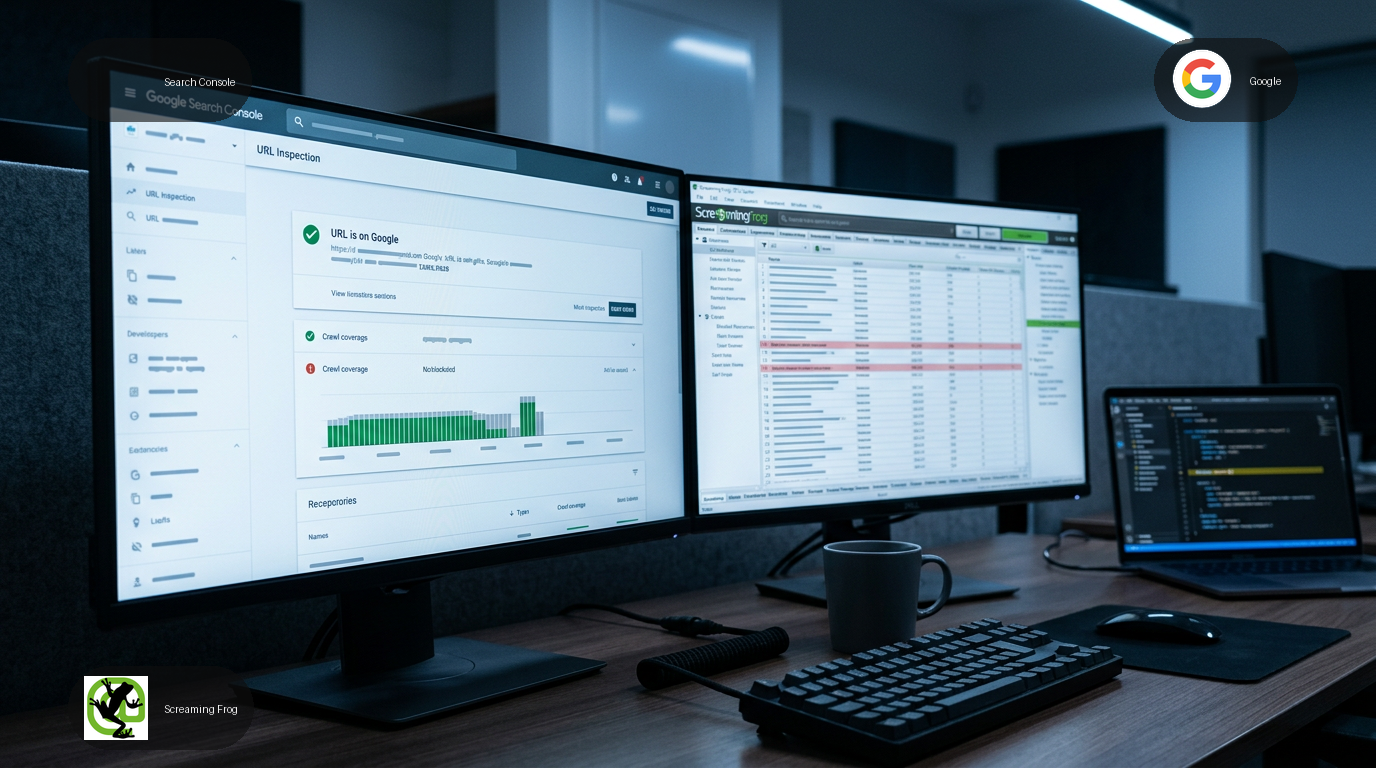
Check your robots.txt at `yourdomain.com/robots.txt`. Validate it with Google Search Console’s robots.txt tester. If you’re running a WordPress SEO checklist, this is item one.
XML Sitemaps
Submit your XML sitemap through Google Search Console. Keep it under 50,000 URLs per file (Google’s stated limit). For sites over 10,000 pages, generate sitemaps dynamically — static files go stale fast, and stale sitemaps waste crawl budget.
John Mueller stated in a 2023 Google Search Central hangout that crawl budget is “not something most sites need to worry about” — but he qualified that with “unless you have many thousands of URLs.” If you have 10,000+ pages, crawl budget is real. Prioritize it.
Canonical Tags
Set self-referencing canonical tags on every indexable page. This sounds redundant until you realize that without them, Google guesses which URL version is canonical — and Google guesses wrong more often than you’d expect. Canonical conflicts between `www` and non-`www`, `http` and `https`, or parameterized URLs split crawl equity across duplicates.
Crawlability audit checklist:
- [ ] robots.txt allows Googlebot access to all target pages and render resources
- [ ] XML sitemap submitted in Google Search Console, returns 200 status
- [ ] Sitemap contains only indexable, 200-status URLs
- [ ] Self-referencing canonical tags on every indexable page
- [ ] No conflicting canonicals between URL variants
- [ ] Crawl budget reviewed for sites with 10,000+ pages
- ] An [AI SEO agent or Screaming Frog crawl confirms zero blocked critical resources
Core Web Vitals and Page Speed: The Numbers Google Publishes
Google publishes exact pass/fail thresholds for Core Web Vitals. There’s no ambiguity here. Either your pages pass or they don’t.
The Three Metrics (2026 Thresholds)
As documented on web.dev/vitals:
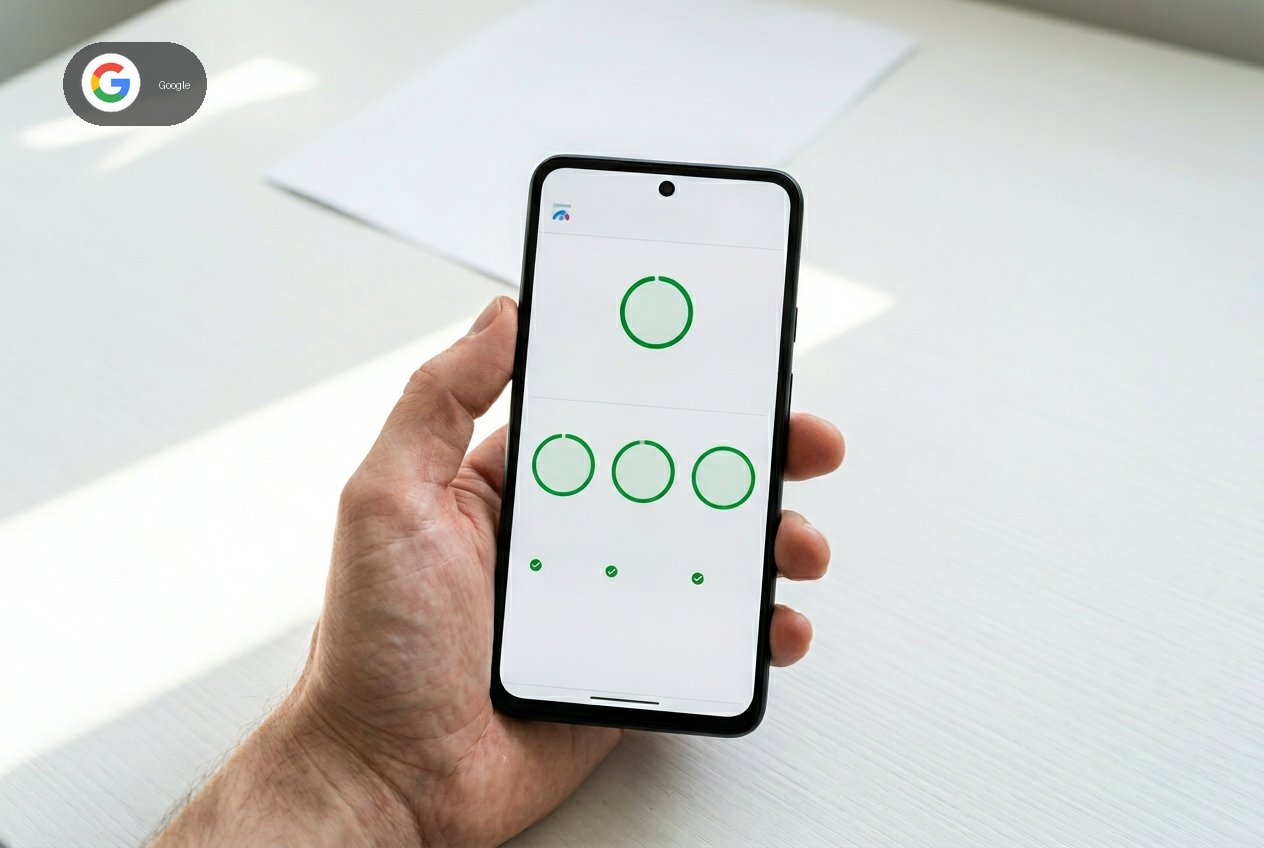
- Largest Contentful Paint (LCP): ≤ 2.5 seconds. Measures how fast the largest visible element loads.
- Interaction to Next Paint (INP): ≤ 200 milliseconds. Measures responsiveness to user input. INP replaced First Input Delay (FID) as a Core Web Vital in March 2024. If you’re still optimizing for FID, you’re optimizing for a metric Google no longer uses.
- Cumulative Layout Shift (CLS): ≤ 0.1. Measures visual stability — how much the page layout shifts during loading.
What Kills LCP
Three things account for most LCP failures: unoptimized hero images (serve WebP or AVIF, specify `width` and `height` attributes, lazy-load below-fold images only), render-blocking CSS and JavaScript in the `
`, and slow server response times (Time to First Byte above 800ms). Fix the image first. It’s almost always the image.What Causes CLS
Images and video without explicit dimensions. Dynamically injected ad units or consent banners. Web fonts that trigger a flash of unstyled text (FOUT). The fix for fonts: use `font-display: swap` and preload critical font files.
Tools and Benchmarks
Use PageSpeed Insights (which pulls from Chrome UX Report field data) and CrUX directly. Third-party speed tools measure lab conditions, not real-user experience. Google ranks based on field data.
A Google-published study from 2020 (updated in subsequent documentation) found that sites meeting all three CWV thresholds saw 24% fewer page abandonments. More recent analysis by Searchmetrics in 2025 showed pages passing all three CWV metrics were 1.5× more likely to appear in positions 1–3 than pages failing any single metric.
Understanding how technical performance intersects with content strategy is where generative seo becomes relevant — speed and structure feed directly into how AI-driven search surfaces your content.
Site Architecture, Internal Linking, and URL Structure
A study published by Ahrefs analyzing 14,000+ sites found that pages buried more than 3 clicks from the homepage received 73% fewer organic visits than pages within 2 clicks. Flat architecture distributes PageRank efficiently. Deep architecture buries it.
URL Best Practices
Keep URLs lowercase. Use hyphens, not underscores (Google treats hyphens as word separators; underscores get concatenated). Make slugs descriptive: `/technical-seo-checklist/` beats `/post-id-4829/`. Strip unnecessary parameters. If your CMS appends `?utm_source=` or `?sessionid=` to URLs, canonicalize to the clean version or block parameter URLs from indexation.
Internal Linking as PageRank Distribution
Internal links aren’t just navigation. They’re how PageRank flows through your site. Every orphan page — a page with zero internal links pointing to it — is invisible to both crawlers and users. Orphan pages are a ranking liability because they receive no authority signal from the rest of your domain.
Breadcrumb navigation serves double duty: it improves user orientation and provides a structured data opportunity (BreadcrumbList schema) that Google renders directly in search results.
Architecture audit checklist:
- [ ] No target page more than 3 clicks from homepage
- [ ] URLs lowercase, hyphenated, descriptive, parameter-free
- [ ] Orphan pages identified (Screaming Frog → “Orphan Pages” report) and linked
- [ ] Internal link audit complete: every target page has ≥3 internal links
- [ ] Breadcrumb navigation implemented with BreadcrumbList schema
On-page SEO checklist items like heading hierarchy and keyword placement depend on solid architecture. Get the structure right first. Scaling these audits is where ai marketing automation earns its keep — especially on sites with thousands of pages.
HTTPS, Security, and Structured Data: The Trust Layer
Google confirmed HTTPS as a ranking signal in August 2014. That signal remains active in 2026. There’s no debate here.
Mixed Content
Mixed content occurs when an HTTPS page loads resources (images, scripts, stylesheets) over HTTP. Browsers flag it. Users see warnings. Google sees a broken trust chain. Detect mixed content in Chrome DevTools console (filter for “Mixed Content”) or run a Screaming Frog crawl filtered to insecure resource URLs. Fix by updating all resource URLs to HTTPS or using protocol-relative paths.
Structured Data
Schema.org markup is the mechanism for earning rich results — review stars, FAQ accordions, product pricing, how-to steps. The markup types that matter most for publishers: Article, FAQ, Product, and HowTo.
Structured data does not directly boost rankings. Google has stated this explicitly. What it does: increase click-through rate by making your result more visually prominent. A Milestone Research study found that pages with rich results earned 58% higher CTR than plain blue links for the same query. Higher CTR feeds engagement signals, which indirectly supports ranking performance.
Validate markup with Google’s Rich Results Test. This article itself uses Article schema — `author`, `datePublished` (2026), `dateModified` — because structured authorship signals are exactly the kind of trust layer that RAG and knowledge systems and AI-driven search engines consume.
The 80/20 Rule for Technical SEO: Where to Spend Your Time
What is the 80/20 rule for SEO? Twenty percent of technical fixes typically drive 80% of crawlability and ranking improvement. I’ve seen this pattern repeat across every audit I’ve run.
The High-Leverage 20%
These five categories account for the vast majority of ranking suppression on the sites I’ve audited:

- Indexation errors — pages blocked by robots.txt, noindex tags, or canonical conflicts
- Core Web Vitals failures — especially LCP on mobile
- Broken internal links — 404s that leak PageRank and create dead ends
- Missing or conflicting canonical tags — splitting authority across duplicate URLs
- HTTPS issues — mixed content, expired certificates, redirect chains from HTTP
The Low-Leverage 80%
Micro-optimizing meta descriptions on pages already ranking in positions 1–5. Shaving 50ms off a page that already passes CWV. Tweaking alt text on decorative images. These tasks feel productive. They aren’t.
Prioritization Framework
| Priority | Definition | Examples |
|---|---|---|
| Critical | Blocks indexation | robots.txt misconfiguration, sitewide noindex |
| High | Directly hurts rankings | CWV failures, broken canonicals, HTTPS errors |
| Medium | Reduces CTR | Missing structured data, poor title tags |
| Low | Marginal gains | Minor speed optimizations on passing pages |
Across 9+ e-commerce brands at Bloom Search Marketing, applying this framework — fixing Critical and High items first, ignoring Low until everything above it was resolved — produced a 43% average increase in organic traffic. The fixes weren’t exotic. They were boring, foundational, and almost always in the top two tiers.
Once the technical foundation is solid, content becomes the multiplier. That’s where an AI content agent picks up where the technical checklist ends.
FAQ: Technical SEO Questions Answered Directly
What does technical SEO include?
Technical SEO covers crawlability, indexability, site speed (Core Web Vitals), structured data (Schema.org markup), HTTPS security, and mobile optimization. It’s the infrastructure layer that determines whether search engines can find, render, and rank your pages.
What is the 80/20 rule for SEO?
Twenty percent of technical fixes — indexation errors, CWV failures, broken canonicals, HTTPS issues, and broken internal links — drive roughly 80% of ranking improvement. Prioritize these before touching anything else.
Is SEO dead or evolving in 2026?
Evolving. AI Overviews and zero-click searches have changed how traffic flows, but organic search still drives the majority of web traffic. Sparktoro’s 2025 research found that Google sends over 50% of all web referral traffic — more than every social platform combined. The channel is changing shape. It isn’t shrinking. For a broader view, explore more on seo and how the discipline is adapting.
What are the 4 pillars of SEO?
Technical SEO, on-page SEO, off-page SEO, and content. Technical is the foundation. The other three depend on it. A perfect content strategy means nothing if Googlebot can’t crawl the pages it lives on.
Conclusion
The single most important insight: fix what blocks crawling and indexing before you optimize anything else. Everything downstream — speed, architecture, structured data — depends on Google being able to reach your pages.
- Fix crawlability and indexation first — robots.txt, sitemaps, canonicals
- Pass all three Core Web Vitals thresholds — LCP ≤ 2.5s, INP ≤ 200ms, CLS ≤ 0.1
- Flatten architecture and eliminate orphan pages — no page more than 3 clicks deep
- Apply the 80/20 framework — most sites have 3–5 critical issues driving the majority of their ranking suppression
If you want this checklist executed automatically — crawl audits, issue detection, fix prioritization — without adding headcount, see how the autonomous SEO pipeline works at Botonomy. For readers who want to explore agent-level tooling, start with the AI SEO agent.